Human-Computer Interaction 3e Dix, Finlay, Abowd, Beale
extra material, case studies etc.
overview
Extra material to extend and support the book.
more coming ...
online!
 why study human–computer interaction?
- This video looks at a variety of examples to explore the different reasons why human-computer interaction is an important and exciting area to study.
-
making the most of stakeholder interviews
- Working with stakehoders takes a lot of organising and consumes both your tmem and theirs. Make the most of the precious time you have with them.
-
act it out
- Reading a scenario can be helpful, as can talking through a user's activities in an interview. However, sometimes physically acting things out adds an extra dimension.
-
early lessons: it's not all about technology
- Lessons from an 1960s Systems Analysis book - why it's important to watch the users, and problems aren't always solved with a computer.
-
how many computers?
- see exercise page 60.
How many computers do you have in your home?
How many computers do you normally carry with you in your pockets or bags?
-
desire and disaster
- There are always more things you would like to do when creating or updating a system: problems to fix, new features to add, ways to make what you have easier to use, more slick, more appealing. How do you choose which to do first?
-
are five users enough?
- Along with Fitts’ Law and Miller’s 7+/-2 this “five is enough” must be among the most widely cited, and most widely misunderstood and misused aphorisms of HCI and usability.
-
Spitfire
or not a Spitfire?
- see page 49. Design Focus: Human error and false memories
Well it did seem such a good story we told in the second edition,
the Spitfire with a confusing ejector seat button ... but unfortunately
not quite accurate!
-
the
strange story of Draken Sierra 44
- This is the full story of the ill fated Draken and its drop tanks.
Courtesy Kai-Mikael Jää-Aro.
-
as
others see - colour blindness
- basic facts about colour blindness ... and how the e3 site
looks to the colour blind
-
Moore's
law
- see box page 115. Computer speeds and capacities are increasing
exponentially - what does this mean for the user and where is
it leading us?
-
Cultural
probes - methods to study new environments
- see page 200. Design Focus: Cultural probes
-
Technology probes
- Technology probes are a means for users and designers to envisage radically new technology or applications through the use of early high-fidelity prototypes.
-
Cybernetic Understanding of Fitts' Law
- Fitts' Law is perhaps the most commonly known 'law' of psychology
used in HCI, but why is it true and what are its limitations?
-
- see page 200. How to choose the best trade-off between menu breadth and dpeth, and why Miller's 7+/-2 is not the way to do it.
case studies
-
Mute Wars
- When network race conditions can render you speechless.
-
Eye contact in recorded video
- A simple tip to help mainain appropriate eye contact and gace direction when creating prerecorded video for education or presentations.
-
Just try it once – (very) early evaluation
- An unsuable coffee grinder reminds us that some faults just need us to try things out.
-
Ghost Orders – getting the job done
- When new systems do not match working practices, those on the ground develop workarounds, tweaks and subversions of the systems in order to 'get the job done'.
-
Values, Conflict and Cows
- Different stakehoders may have different value systems. Do we use technology to help resolve conflicts or to simply allow the dominant party to exert power through the technology?
-
Pensions printout
- Some lessons about designing novel technology ... from a paper printout.
-
War stories: lessons from UI disaster stories
- Things go wrong in even the most large-budget, popular products. Here are links to some of Alan's blog posts about times when things went wrong, and some of the the ways you can prevent this happening to the systems you design.
-
Gmail – colours in a mess
- Sometimes even major internet companies make simple, yet serious mistakes. In this short case study we see how easy it is to mess up colours not only making text unreadable, but potentially undermining the confidence of users in your message.
-
The dynamics of trust
- see Section 3.9.2 designing experience
Trust in a website ebbs and flows - getting this right is crucial to a site's success.
-
Hermes
- electronic doorplates
- see page 86. Design Focus: Hermes a situated display
-
Absolutely
crackers!
- see page 157, Section 3.9.2 designing experience
The design of virtual crackers and why they work
-
HCI
book search - designing value
- see page 160. Section 3.9.4 Managing value
-
Digitising
Hospital da Trofa
- see page 468. Design Focus: tomorrow's hospital - using participatory
design
-
Car courtesy lights - designing incidental interaction
- see page 655. Design Focus: Designing a car courtesy light
-
SPAM
- coordination in residential care using SMS
- see page 673. Design Focus: SMS in action
-
Ambient Wood
- see page 723. Design Focus: ambient wood - augmenting the physical
A rich learning experience in a technologically enhanced wood
in Sussex.
-
Arts and technology meet
- see page 726. Design Focus: Exploring intimate computing in the arts
How interactive technology can be used in the arts and how arts installations and performances can teach us about interaction.
-
Mack Room - visiting together ... but not together
- see page 732. Design Focus: Shared experience
How mixed reality allows people to share a gallery visit even when they are not all there.
-
Excel
mode error
- a real example of closure, modes and design
scenarios
-
Nuclear
Reactor
- used in exercises 5.2, 5.3, 5.4, 5.5, 8.3, 16.5, 17.9
-
Nuclear
Reactor – variant 2
- used in exercises ...
-
Mobile
Phone
- used in exercises 15.6, 16.6, 17.8
-
Soap Booth
- used in exercises ...
-
Train Booth
- used in exercises ...
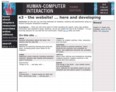
how e3 home page appears to yellow-green colour blind users
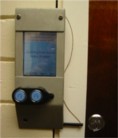
Hermes door display
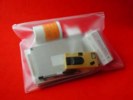
cultural probe pack

something strange
in Ambient Wood